
How Arrest Warrants Work in Clark County
An arrest warrant lets officers take a person into custody once a court has found probable cause. Nevada law covers the details in NRS Chapter 171. The statutes set out probable cause, required contents, issuance, and service. Clark County adds one wrinkle. The issuing court controls the file, while the officer or agency directed to serve it may be someone different. Record and service questions go to different desks. A bench warrant for a missed hearing is not the same thing, and neither is a search warrant aimed at a place or thing, because the records, the service route, and the response all differ.
Nevada's Probable-Cause Record
Clark County Justice Court judges often run the magistrate stage after an arrest. They handle probable cause, arraignment, bail, and the preliminary hearing. Felony matters can bind over to the Eighth Judicial District Court later. A city Municipal Court stays inside its own jurisdiction. It can issue a warrant for a city misdemeanor. The Nevada arrest-warrant statutes set the legal frame. No public website can settle a person's individual status, so ask the issuing clerk or an attorney whether a current record, bail amount, next hearing, or sealed item exists.
Arrest Warrants: What They Contain
A Clark County warrant file may name the issuing court, the case, the person, the alleged offense, the date, the judge, bail, and directions to the serving officer. Not everything is open. Supporting affidavits may not be public. The Eighth District and Justice Court portals can display case information without showing every warrant order or attachment.
| Court and judge | Shows who issued the order and where to confirm it. |
|---|---|
| Case or complaint number | Gives the clerk a precise record key. |
| Charge or offense | Identifies the matter connected to the probable-cause request. |
| Warrant date | Helps distinguish a new order from a later court event. |
| Bail or release terms | Must be confirmed with the court before payment. |
| Service direction | May identify the peace officer or agency authorized to act. |
A Search-Warrant Affidavit May Be Sealed
Arrest and search-warrant records follow different access rules. Under NRS 179.045, a court may keep a search-warrant affidavit sealed. Nevada court policy also recognizes sealed, juvenile, NCIC, and confidential law-enforcement material. A missing affidavit does not mean the court file is missing, and the official page spells out that access distinction for Clark County readers.
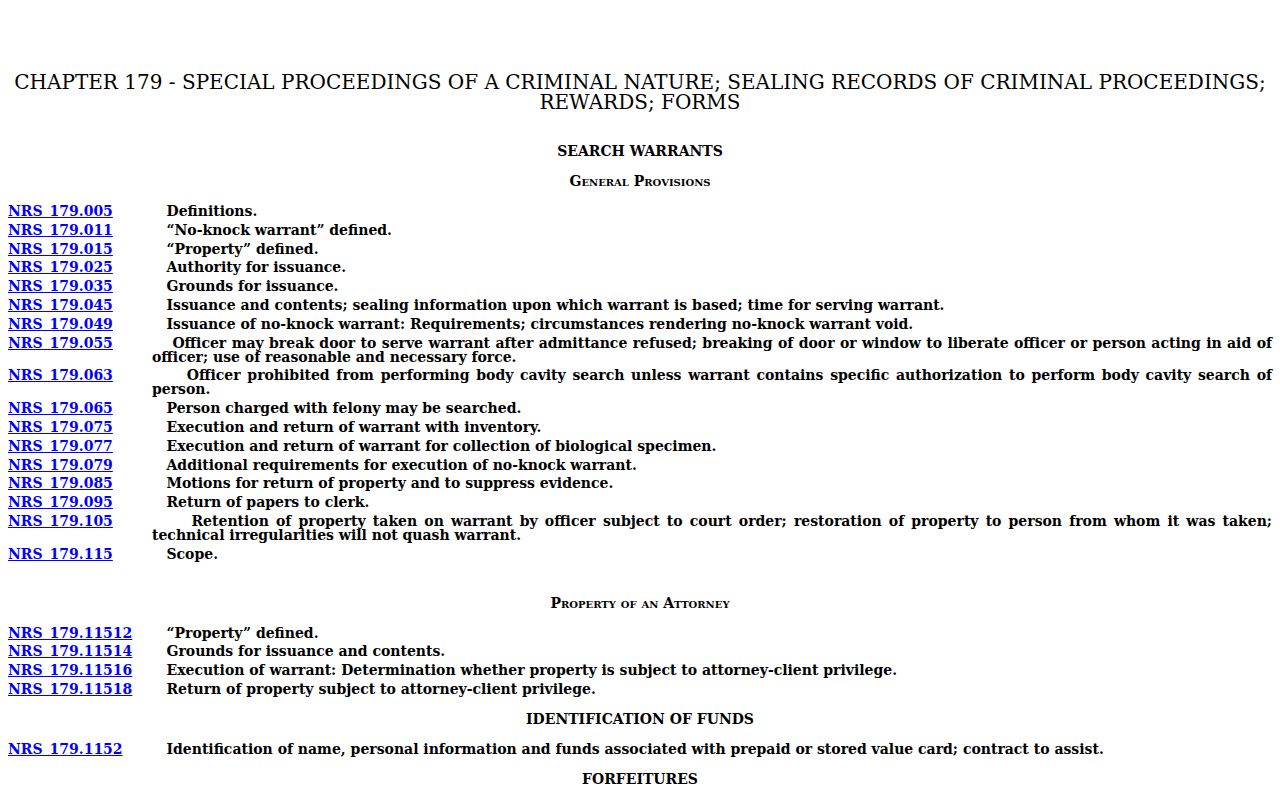
The official Nevada search-warrant law draws this access line. Clark County readers can check the statute text there instead of chasing sealed documents.
How Warrants Get Served in Clark County
Service depends on the warrant and the court. A city police department or municipal marshal may handle a city-court matter. Justice Court warrants can name a local peace officer. The Sheriff's Civil Process Bureau handles civil process and some bench-warrant service in Clark County, but it is not the universal public arrest-warrant desk. A federal warrant is different again. It belongs to the federal system, may involve the U.S. Marshals Service, and is not a Clark County clerk record. Keep federal, state, city, Justice Court, and District Court paths separate whenever you ask about a warrant.
Who Serves Depends on the Issuing Court
Court first, agency second, bail third. Las Vegas Metropolitan Police Department's court-links information says police cannot verify identity by phone and sends readers to the courts instead. So the clerk is the right first call. In Clark County, ask the clerk about a personal status question, and open the bail window only after the court confirms the amount.
Issuing court
Confirms warrant label, case, bail, and next event.
Serving agency
May be city police, a marshal, sheriff, constable, or another directed officer.
Pre-Trial Services
Receives specified bail after the court route is clear.
Arrest Warrants, Summonses, and Bench Warrants
These three instruments are not one search result. A summons calls a person to appear, while a bench warrant answers a missed court duty. An arrest warrant authorizes custody after probable cause. The same Clark County case can shift from one to another, so read the court's exact label on every paper.
| Instrument | Main purpose | First source |
|---|---|---|
| Summons | Directs a person to appear. | Issuing court clerk |
| Bench warrant | Responds to missed appearance or noncompliance. | Issuing court and marshal |
| Arrest warrant | Authorizes custody after probable cause. | Issuing court or attorney |
District, Justice, and Municipal Routes Diverge
The three court routes diverge fast. Clark County Justice Courts handle traffic, misdemeanor, bail, probable-cause, and preliminary-hearing work across townships. Municipal Courts cover city-limit traffic, ordinance, and misdemeanor cases. The Eighth Judicial District Court keeps the felony and gross-misdemeanor files after bind-over, and a Las Vegas city search cannot confirm a North Las Vegas Justice Court matter. The Eighth District Court and the Justice Court directory are separate starting points. Go by the court name on the paper, not the nearest building.
Handling an Arrest Warrant in Your Name
Don't wait for a chance encounter with police. Call the issuing court or a Nevada attorney and ask whether the Clark County record is current, whether bail is set, whether a motion or walk-through is available, and what happens after payment. A lawyer can help with recall, quash, surrender, or bond. Already in custody? Use official detention and bail information only after confirming the court and the case number.
Urgent: Verify the court through its government website. Court staff will not demand gift cards, cryptocurrency, or immediate payment through an unknown link.
- Write down the issuing court and case number.
- Ask about bail, a required appearance, and the next court event.
- Use the court's stated motion, payment, or surrender procedure.
- Keep the receipt and confirm that the court updated its record.
Before Contact, Confirm the Official Court
Clark County residents get warrant-scam warnings for good reason. The Eighth District Court and the county's own warrant-status page both tell you to verify independently. Call the court's published number or use its records page, never a number a caller gives you. The official warning is blunt: court personnel do not demand payment on the courthouse steps or over the phone. On the records side, NRS Chapter 239 sets Nevada's public-records framework, though sealed, juvenile, and active-investigation files stay restricted. A records request can find a document; it is no substitute for a motion or a lawyer's advice. Source: official page.
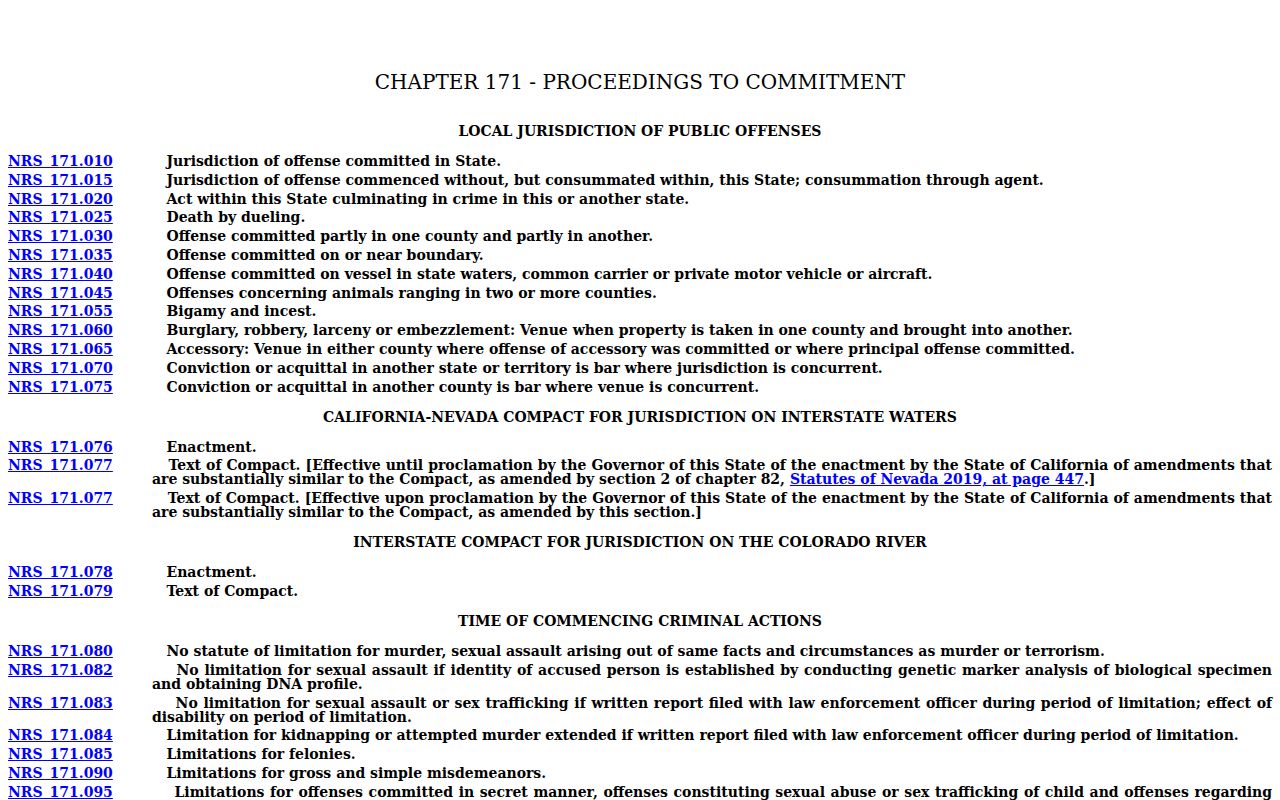
The statutes explain why a Clark County warrant record has to be read alongside its issuing court and its service direction.